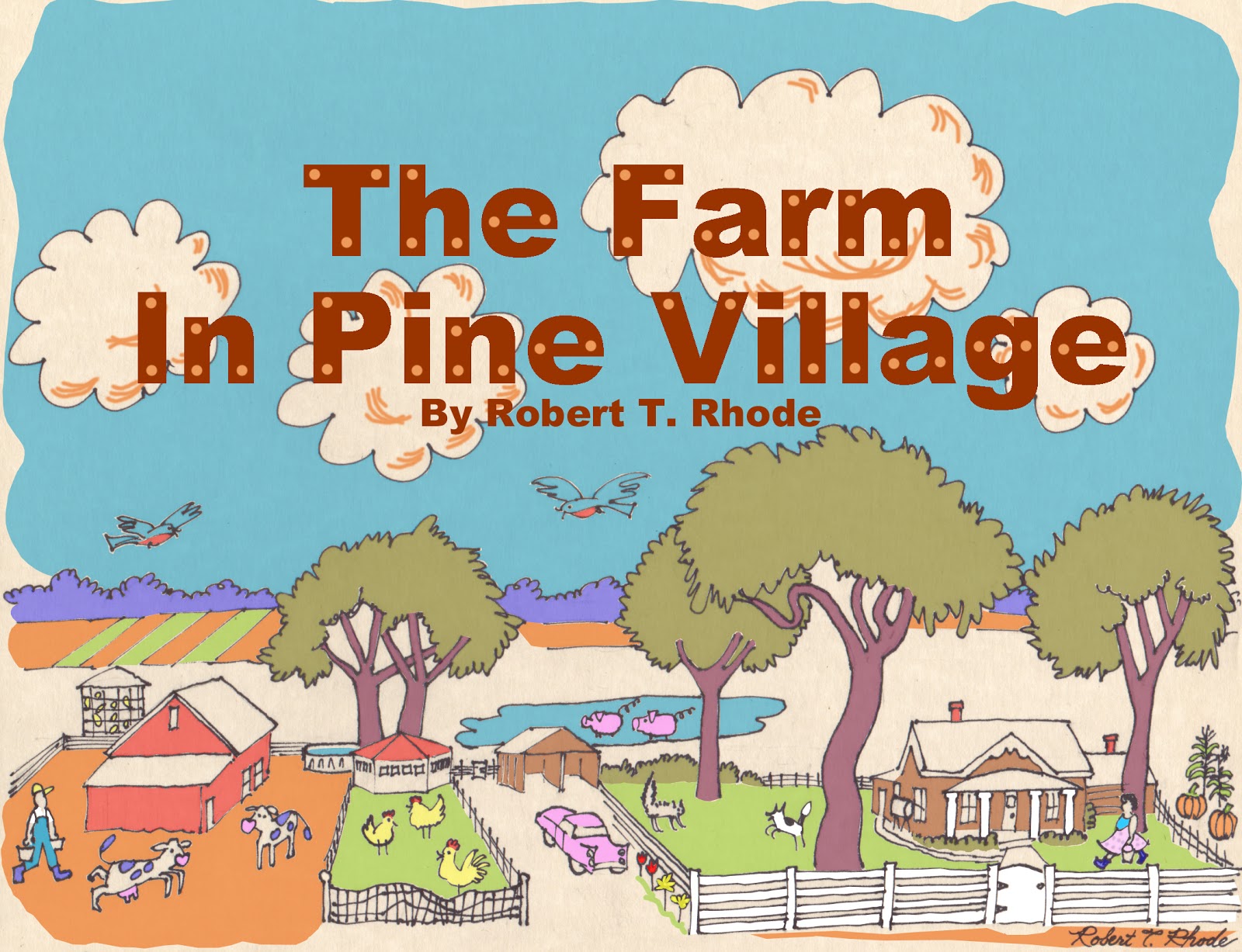
Robert T. Rhode

Robert T. Rhode
Robert T. Rhode
Showing posts with label Pine Village. Show all posts

Sunday, June 23, 2019

35. The Sectional ... THE FARM EAST OF PINE VILLAGE


Pine Village had won the sectional basketball contest only five times: 1921, 1922, 1934, 1939, and 1941. Thirty-one years had elapsed since the last win. Calling 1972 the “Year of the Village,” the cheerleaders, the Pep Club, and the Booster Club shared the view of Mrs. Cottingham, a teacher who was serving as guidance counselor: “This is our year.” Coach Bill Barrett said, “We have to be ready mentally to play the game. I feel we’re the best team in the county—the ability is there, and we’re twenty points better than any team in the sectional.”

As editor of The Chrome-Plated Clipboard, the school newspaper, Robert did all he could to support the team.

Pine Village won the first game of the sectional by beating the Fountain Central Mustangs with a score of 83 to 67. Robert distributed a hundred purple Ditto sheets as souvenirs. “Friday night will see the contest where the team and the fans alike must strive with every ounce of strength and spirit to overpower the Seeger Indians.”

Coincidentally, the weights of the team members added up to 1972 pounds; their heights, to seventy-two feet.

In all the years that Robert had attended the school in Pine Village, basketball games were exciting occasions.

The architectural design of the gymnasium lent itself to a feeling of immediacy—with everyone seated so near the court! The elongated-dome ceiling trapped the cheers of the crowd and magnified the sound until the noise could be described as “deafening.”

Cokes and popcorn were available down a flight of stairs and around the corner in the bay area of the shop and agriculture classroom on the north end of the gym, but students carrying wire baskets hawked soft drinks up and down the aisles between the benches. Members of the band in their blue uniforms with silver buttons, white stripes, and white braids gathered for the half-time show.

Basketball games were the principal entertainment of the farming community. Everyone, it seemed, turned out for the contests. The parking lots were full of cars and pickup trucks.

In 1972, farmers talked about the 1954 team from Milan, Indiana, that achieved the Milan Miracle, winning the Indiana High School Boys Basketball Tournament Championship at the Butler Field House in Indianapolis. Could Pine Village be another Milan? One by one, the small schools across Indiana were falling—merging into consolidations. Such small schools had grown accustomed to losing to teams from the big cities of the Hoosier State, but now those local schools that remained also faced tough challenges in overcoming teams from the consolidated school districts. 

Joe had been present for Pine Village’s 1934, 1939, and 1941 sectional championships, and he had listened to the Milan victory on radio. He wondered if the heyday of Pine Village basketball had already occurred in the 1930s and early 1940s, but he hoped the halcyon time lay yet ahead.

In the weeks leading up to the 1972 sectional, townspeople who happened to meet on the sidewalk or at the elevator or post office or who were gathering for church services talked anxiously about the team’s chances.

Years later, Robert would be a clarinetist in the Indiana University Pep Band at two NCAA championship games when IU emerged the victor, and he would remember the Pine Village sectional games as fitting in the same thrilling category.

The sectional final game between Pine Village and Seeger felt unreal. Robert sat next to his cousin Pam in the Pep Club seats. Pam and Robert yelled until they were hoarse. They were continuously leaping to their feet. These players on the court were their friends, and their friends were playing their hearts out to win.

Once, Robert had reflected in print, “For Pine Village to cheer forward its team in this game in this way is truly fine! This brings our small world together!”

Robert glanced across the intensely emotional faces of townspeople and of neighbors such as Mr. Reed, driver of the team bus, and Mr. Brutus, driver of the fan bus. The noise was like that of an agitated ocean crashing on a rocky shore. Robert could see people shouting, but he could not distinguish their words amid the roar. The cheerleaders sustained frenzied cheer after frenzied cheer without pause.

This was glory! Hope and fear wrestled in the countenances and the gestures of all from young to old.

The team raced back and forth in a fast-paced matchup that the strongest defense could not slow. Mr. Barrett cupped his hands like a megaphone and yelled instructions to his team. Mr. Owens, the assistant coach, paced the sideline like a lion in a cage.

With a fierce expression, Bax Brutus guided the total team effort of Pine Village.

Each time the ball flew up, a collective breath was held. When it slid straight through the hoop, the noise from one side surged.

Before Robert could comprehend what had happened, the clock ran out. Pine Village had won with a score of 76 to 72! On the blue side of the court, pandemonium reigned.

It was indeed the Year of the Village.

Even though the team eventually lost to Benton Central in regional play, it had broken the spell and had won the sectional. The team’s victory had proved that hearts and minds—collaborating with confidence and skill—can attain high goals.

Saturday, March 31, 2018

11. The Diastema ... THE FARM IN PINE VILLAGE


The 1950 Chevrolet was black. In front of the regular windows on the driver’s side and passenger’s side were triangular windows (wing vents) that could be turned in such a way as to force a blast of wind against the face. The breeze felt so good on a hot day! The windshield was in two halves joined by a thin metal connector moulding. When Robert was sitting in front (which was most of the time because he suffered from motion sickness when seated in the back), his eyes would focus first on the metal moulding then on the distant view then on the connector again, until he was well on his way toward nausea!

Joe and Ida drove differently. Joe was far-sighted and enjoyed perusing fellow farmers’ fields to his left. While doing so, he slowly veered the car to the right until the right wheels were off the road and onto the berm. Miraculously, he never lost control of the vehicle but gradually brought it back onto the pavement, only to repeat the experiment immediately afterward. Ida, meanwhile, played with the throttle. Her small foot, usually wearing a sandal in summer, wore out the gas pedal by depressing it and lifting up right away, depressing it and lifting up right away. The car lurched forward and hesitated, lurched forward and hesitated in response. Robert was anxious when Joe drove, nauseous when Ida drove.

When most of the corn had been picked, Robert was riding with Ida at the wheel. She was driving out to visit with Robert’s great uncle Marshall and his great aunt Anna. Down went the gas pedal, up went the gas pedal, down went the gas pedal, up went the gas pedal.

Robert had developed the bad habit of standing in the front seat. On this occasion, he swayed backwards and forwards in time with the motion of the throttle.

“Sit down,” Ida told Robert.

He disobeyed.

“Come over here where I can put my arm around you,” Ida said.

He disobeyed.

Frustrated, Ida said, “Alright! See if I care if you lose your balance.”

Robert was near the passenger door and was having a hard time keeping his balance while the car briefly gained speed and momentarily slowed, gained and slowed, gained and slowed. He felt slightly dizzy. He smelled his mother’s new permanent. (Ida had to have curls in her straight hair!) The Chevrolet was lurching and hesitating while heading east along the gravel road that ran in front of the McFatridge farm. The car dipped down the slight hill leading to the intersection with the gravel road that ran south past the Anderson farm.

Tall corn in the fence corner blocked the view to the right. Ida obeyed the stop sign, but the corn was planted so close to the road that she could not see around it. The tan leaves rustled in the cool breezes of autumn. Ida slowly entered the intersection only to discover that a road grader was bearing down on the intersection from the right. The corn had hidden the big machine! Ida slammed on the brakes, and the road grader just missed the front bumper!

Robert flew headfirst into the hard metal dashboard. He ricocheted back toward the seat and slid onto the floor. He was watching stars sparkling and spangling before his eyes.

Ida put the car in parking gear and muttered, “Why don’t you ever stand close enough so I can grab you?”

Ida did not yell at Robert. She felt terrible about what had happened.

She gently lifted Robert back into the seat. Using her hankie, she stanched the blood flowing from the gums where Robert had knocked out his two front upper teeth. Robert was beginning to see his surroundings again, and the pain was starting. He knew he had been wrong to stand on the seat. Now he sat where he was supposed to sit, and he whimpered.

Ida turned the car around and went home to ask Joe what should be done. Joe and Ida took Robert to Dr. Sullivan, their dentist in Attica, a town ten miles to the south. Dr. Sullivan explained that there was nothing to do but to wait for Robert’s permanent teeth to come in.

At first, Robert’s pronunciation changed to a lisp, but, instead of retreating into his early fear of talking, he pushed through the obstacle and learned to place his tongue a little farther back so that he could say the consonants that otherwise would become hisses. By degrees, he was learning to be more confident and assertive.

A little less than a year after the incident—and just in time for Robert to enter the first grade without embarrassment—Robert’s permanent teeth came in. Owing to the injury, they were separated by a gap, or diastema. Whether Robert liked it or not, his diastema became a trademark. Terry–Thomas was a popular British comic film actor in American movies. Robert always enjoyed his performances because, like Robert, he had a pronounced diastema.

Robert’s teeth were somewhat yellow from the antibiotics he had been given for his frequent earaches. Worried about his diastema and his yellow teeth, his parents took him to see an orthodontist in Lafayette, Indiana. Taking children to an orthodontist was a very modern thing to do. The orthodontist had offices in a very modern building not far from Smitty’s, a large independent grocery store near Purdue University. The very modern orthodontist said that he would apply hydrogen peroxide and heat to whiten Robert’s teeth. When the very modern orthodontist told Joe and Ida that correcting Robert’s diastema would cost $2,000, they asked Robert if he really wanted to have his incisors properly aligned through wearing very modern braces. Robert hated dentists, so the answer was easy. With vast relief, Robert said no to the very modern era. Also relieved, Joe and Ida did not have to pay $2,000 for a closed diastema and whitened teeth.

Ever after that, whenever Robert brushed his teeth, he recalled the hard old dashboard of that 1950 Chevrolet.   

Saturday, February 17, 2018

5. The Holidays ... THE FARM IN PINE VILLAGE


After Charles returned from school one day, he and Robert were playing Blob when their mother announced that they were going to the Masonic Lodge to see Santa Claus that evening. Blob was a game that the boys had invented. In previews at the movie theater in the nearby town of Oxford, enough of the plot of the movie by the same name had been revealed to suggest the game, without necessitating a viewing of the horror film—which their mother would never have permitted, anyway.

One of the brothers was designated “the Blob.” He covered himself with an old blanket and huddled on the floor while the other brother hid. Then the Blob searched for the hidden brother. While he searched, he periodically knelt and rolled around on the floor while keeping the blanket over him. When he found the brother, his object was to cast the blanket over him while making horrifying snarling sounds. If he failed to get the blanket to fall over his brother, he had to crouch beneath the blanket and make muttering noises until his brother had a chance to hide again. The search repeated. If he was lucky enough to drop the blanket over his brother, the brother became the Blob, and the proverbial tables were turned.

With a visit to Santa Claus in the offing, the brothers soon found themselves having to dress in their Sunday best. Because temperatures were chilly, they had to don long underwear. Robert had trouble folding the bottom of the leg of the underwear and stuffing it inside his sock. After he had pulled on his woolen trousers, he had to put on his corrective shoes and tie their laces. His mother had repeatedly demonstrated how to form a loop and to hold it in one hand while doubling the other end through the loop so as to form a second loop. Robert could almost achieve that much, but, when he tried to pull the two loops tight, the end of the one he had doubled invariably slipped through the first loop. He was left with one loop, a loose knot, and a long strand of lace that he would trip over, if he were to leave things as they were.

On his own, Robert had learned to form one loop in one hand and a second loop in his other hand and to tie the two loops together. He assumed (incorrectly) that speed was important, so he practiced forming the loops as rapidly as possible. That way, he could tell his mother, “See? My way is just as fast.” Ida wanted him to tie his shoes the way she had shown him, and she made him try and try again. Finally, Robert’s father said, “Ida, he gets his shoes tied just as nicely his way as our way. Why not let him have his way?” Reluctantly, she consented. (Robert would tie his shoes his way for the rest of his life!)

On this occasion, Robert tied his shoes successfully. Next, his brother and he had to zip up their parkas, put on their stocking caps, slip the hoods of their parkas over the stocking caps, wrap their mufflers around their faces, and put on their gloves. Charles and their mother climbed into the back seat of the 1950 Chevrolet, and Robert and their father took the front seat. Robert always got “car sick” in the back, so he had to ride in the front. His mother thought it was a reasonable concession to put Robert in front.

The boys were perspiring under their parkas, even after the short drive to the Masonic Lodge. The two-story building was on the south side of an alley that led westward from State Route 55 not far from the intersection of State Route 26. Some thirty years earlier, the first floor had served as Ray Ogborn’s garage and automotive repair shop. The boys’ grandmother Kosie had a brother, Charles Albert Cobb, nicknamed Charley or Cobbie, who died in 1931. His widow, Margaret Wagner, was the beloved family member that the boys and their parents called “Great Aunt Margaret.” She eventually had married the veterinarian, Doc Goddard, but he, too, died before the boys were born. Residents of the town continued to refer to her as Mrs. Margaret Goddard. Ray Ogborn had purchased the automotive business, but not the building, from Charley, so Great Aunt Margaret transferred ownership of the first floor to her sister Louise and Louise’s husband, Pete Thurman.

To reach the Masonic rooms on the second floor, the boys and their parents trudged down the dark alley. Robert kept turning his head from side to side so that he could see beyond the fake fur that surrounded the hood. Half dead vines shuddered in the cold breeze along the brick wall. Traces of snow highlighted the weeds along the foundation of the building across from the Masonic Lodge. The family passed through a doorway at the very back of the old building and started up the dimly illuminated stairs. Robert tripped more than once. Several of the steps creaked.

They entered the main hall. A huge potbelly stove stood in the center of the room. So much wood had been fed to it that it was glowing red in places and was radiating a tropical heat that melted the frost on the tall windows. Chairs were pushed back around the walls. The boys were thankful to remove their coats, but, even then, they were too hot. They waited patiently for Santa Claus. Well, they knew that this was not the real Santa. He came without being seen on Christmas Eve and left presents for the boys in their very own home. This Santa was a well-meaning member of the lodge. Soon, they heard him ho-ho-hoing. To the adults’ applause, he burst upon the gathering. He was wearing a flimsy Santa costume with a rather poor excuse for a cotton beard, but he was most certainly jolly! He handed small gifts and candy to all the children. The leader of the lodge said a few inspiring words about Christmas, and the event was over. The adults stood conversing with one another far longer than Robert’s patience could hold out, but he knew better than to tug on his mother’s sleeve. Eventually, Ida smiled down at Charles and Robert and asked, “Are you boys ready to go home?” They nodded politely.

On went the parkas, the stocking caps, the mufflers, and the gloves. Once the family was back inside the Chevrolet, Ida suggested that they see the Christmas lights. Joe drove around Pine Village, which took relatively little time, as the town was quite small. Next, he headed north on State Route 55 all the way to Oxford. The stores that year were carrying GE “ice bulbs,” which were pale blue Christmas lights that were shaped like globes and covered with “ice crystals,” as they were called, and Elvis’ recording of “Blue Christmas” had been playing on radio stations for two years. Even so, the family was surprised when Joe drove past Doc Scheurich’s ranch house in the woods just to the south of Oxford. All blue lights outlined the home! The blue was such a departure from the multi-colored bulbs that the boys and their parents were impressed.

Once the family was home, Joe played 45 RPM records on the Victrola, which resembled a piece of furniture and which had an honored place in the living room. Twin doors with ornamental ovals in the gleaming finish swung open to reveal a radio and record player, as well as a fabric-covered speaker, on the right and shelves for storing 45 records on the left. Bing Crosby’s “White Christmas” was a favorite!

Christmas Eve fell on Wednesday, and the family went to the Methodist Church for the evening service. Joe’s father, Seymour, had come from Indianapolis to spend the holiday with Joe, Ida, and the boys. Grandpa Rhode gave everyone a ride in his black 1951 Hudson Commodore 8 Sedan. The family disembarked from the comfortable car and took the stairs to the sanctuary. For the remainder of his life, Robert would retain a detailed memory of how holy the church appeared that night. Candles stood in the windowsills, and their flames reflected from the undulations in the stained glass. Real evergreen boughs surrounded them, and the scent of pine filled the room. People spoke softly as they took their seats along the pews. Mrs. Brutus, the organist, launched into “Hark! The Herald Angels Sing.” Everyone stood and began to sing. Robert long remembered the twinkle in his father’s eyes and the sparkling light reflected in the glistening eyes of his mother, whom the song touched deeply.    

Saturday, February 10, 2018

4. The Cow ... THE FARM IN PINE VILLAGE


The blustery weather of November was at hand. The wind moaned beneath leaden skies, and the branches of the twin oaks near the barn tossed and creaked. Robert and Charles helped scatter ground chicken feed from a repurposed coffee can along the tin feeders inside the old chicken house. Next, it was off to the barn to milk the Holstein cows, which had already come in from the pasture on their own without having to be herded. Fuzz watched from the high threshold of the door of the corn crib within the barn while Charles and Robert used other discarded coffee cans to scoop ground feed from a sack and to pour it in the shallow boxes in the stalls. Their father said, “Watch out below,” and, shortly thereafter, dropped a hay bale through the rectangular hole cut in the bottom of the mow. He followed down the ladder that was nailed to the wall there and began to scatter last summer’s sweet-smelling clover and timothy in the deep hay boxes that ran the length of both sides of the alley down the middle of the barn and that held a shallow feed tray in each stall.

While Joe balanced on a one-legged milking stool and rhythmically squirted the milk into an enameled bucket, Robert and Charles sang songs in the alleyway.

I’ve been working on the railroad
All the live-long day.
I’ve been working on the railroad
Just to pass the time away.
Can’t you hear the whistle blowing?
Rise up so early in the morn!
Can’t you hear the whistle blowing?
Dinah, blow your horn!

Dinah, won’t you blow,
Dinah, won’t you blow your horn?
Dinah, won’t you blow,
Dinah, won’t you blow your horn?

Someone’s in the kitchen with Dinah …

… and on went the rollicking song and others like it, until Joe had finished milking the few cows that needed to be milked. He had almost a full bucket, which he had to carry carefully so as not to spill a drop.

Back at the enclosed porch to the east of the house, the boys and their father unsnapped the line of buckles down their boots, kicked them off, and hung their wraps before sitting down to dinner.

Ida had prepared buttery grilled cheese sandwiches and a huge batch of chili. The conversation flowed without cessation while the four of them ate and ate.

After dinner, the television was turned on so that the family could watch Gunsmoke. All too soon, it seemed, everyone had to go to bed.

In the middle of the night, Robert slowly awakened to unaccustomed sounds. He rubbed his eyes and tried to comprehend why light was coming down the hallway from the kitchen to the boys’ bedroom. He heard his parents’ anxious voices.

Charles was already out of bed, so Robert tossed back the warm covers. Following his brother’s lead, Robert pulled his jeans over his flannel pajamas and put a flannel shirt over the flannel pajama top. In the cool darkness, he accidentally put pajama buttons through the shirt button holes and had to start over. By the time he had found his shoes and socks, he was well behind Charles.

Robert was frightened. Nothing like this had ever happened before.

“I suppose I ought to wake up Glen Bisel,” Joe was saying to Ida when the boys came running into the kitchen.

“What’s wrong?” Charles asked.

The boys’ mother replied, “The cows got out, and one of them fell in the hole.”

Robert suddenly became aware of a distant bellowing. The mournful sound seemed blown by the gusts of wind. The hole was almost as deep as a cow was tall and had been dug to fix a tile problem. It could not be backfilled until Joe could be assured that the difficulties had been resolved.

Joe put on his denim coat and his cap with the ear flaps. Soon, he was driving his GMC pickup to the Sinclair gasoline station to awaken his friend Glen.

Before long, the GMC returned. Behind it came Glen’s wrecker. Joe parked the pickup so that its headlights illuminated the scene. To Robert, the occurrence felt like a weird dream: beams from headlamps casting fantastic shadows, groaning wind, black-and-white cow mooing in distress, Glen carefully lowering his truck’s heavy chain with a canvas sling attached, struggling to position the sling under the belly of the terrified cow, and slowly lifting the cow from the hole that had swallowed it.

As the sling came away, the cow scrambled to trot away. Joe herded it and the other cows through the broken fence before setting a metal fence post and using pliers to splice new wire around the breaks.

“Would you come in for a cup of coffee?” Ida asked Glen.

“No, thank you,” Glen smiled in the light from his wrecker. “I think I’ll go back to bed.”  It was—after all—the middle of the night.

While Robert, Charles, and their mother trudged back to the house, Joe drove the pickup around to the driveway.

“I guess Dad should have listened to you,” Robert said.

“Don’t find fault with your father,” Robert’s mother warned. “Once there’s a problem, it’s time to fix the problem. It’s never the time to say, ‘I told you so.’”

Charles and Robert went back to bed while Ida and Joe had a cup of NescafĂ© instant coffee to settle their jangled nerves. It had been an eventful night. Robert lay awake for some time, listening to the roar of the wind. He thought about how his father was an excellent farmer, and Robert wondered how his father could sometimes make slapdash fence repairs that anyone could see would not hold back cows for long. Robert guessed that his father had much to do and could not give every task the same degree of attention. Thankfully, his father had fixed the fence properly on this night! Then Robert thought about how his father worked hard throughout each day, including hours before sunrise and after sunset, and Robert remembered what his mother had said about not finding fault. He felt embarrassed that he had been critical of his father’s fence-mending. With a sense of guilt, he tossed and turned until he finally fell asleep. Inspired by his mother’s frequent readings of Winnie the Pooh stories, Robert dreamed that a Horrible Heffalump had fallen in the hole.