Robert T. Rhode

Robert T. Rhode
Robert T. Rhode
Showing posts with label weeding. Show all posts

Sunday, July 5, 2015

My Summer in a Garden: Harvesting Days (Last Installment in This Series)


The earliest origins of the word harvest seem obscure to me. In my estimation, the more logical argument is that the word comes from words of long ago that meant to pluck, as in plucking fruit. The less obvious line of linguistic reasoning is that harvest is related to harrow, a noun or a verb referring to the stirring of the soil prior to planting. My thinking is that harrowing and harvesting are at such opposite ends of the gardening venture that they must not be related. The word harrowing, though, can mean a distressing experience that deeply stirs the emotions. Given the problems I encountered with this year’s garden, I can certainly describe my gardening experience as harrowing.

Plucking the fruits of my labor is much more positive, and I want to focus on that meaning of harvesting. With more rain than anyone knew what to do with, my garden lurched into productivity. It is only the beginning of July, yet almost everything in my garden is ready to be harvested.

A Wagonload of Squash from My Garden

I am clipping vibrant flowers for bouquets. I must bring in my beets, prepare a few for canning, and eat the rest. Yum! My carrots are at the delightfully tender stage. Potatoes are nearing the day when they should be dug. Beans are setting on, and I have a predictable surplus of squash, which I have been devouring with gusto and a little salt. While the tomato plants are tall, bushy, and green, they need hot days and dry air to be effective. I am already gathering onions, and it will not be long before the entire crop should be dried on my screened-in porch prior to tying the golden bulbs in bunches and hanging them from nails on the walls of my solarium. (See my blog entitled “Why I Plant Onions” [March 22].) I look forward to snipping off onions as needed in my cooking.

So I feel truly civilized. I have gardened. I have grown my own food. I am harvesting my own vegetables. I am cultured, and I am literary. The word culture arises from an old word for plow (or plough, if you prefer); as I have frequently plowed my garden, the earth and I (one of its stewards) have become cultured. By virtue of the fact that literature arises from culture and I have blogged about my garden, I hope I have been literary. I have closed the circle: plowing, planting, weeding, hoeing, harvesting, cooking, eating, reading, writing, culturing (plowing). In this way, agriculture can be seen as the preparation for enlightenment, a higher circle, if you will. In the same way that the blade of my hoe became polished during frequent use, the practice of tending to my garden has polished me.

I come away from the experience with respect for the cycles of nature and with joy for this chance to breathe the air, work the ground, and pay attention to the songs of warblers, the wings of butterflies, and the destinies of clouds. When I taste the fresh beets, I feel at one with the planet hosting my little time here.
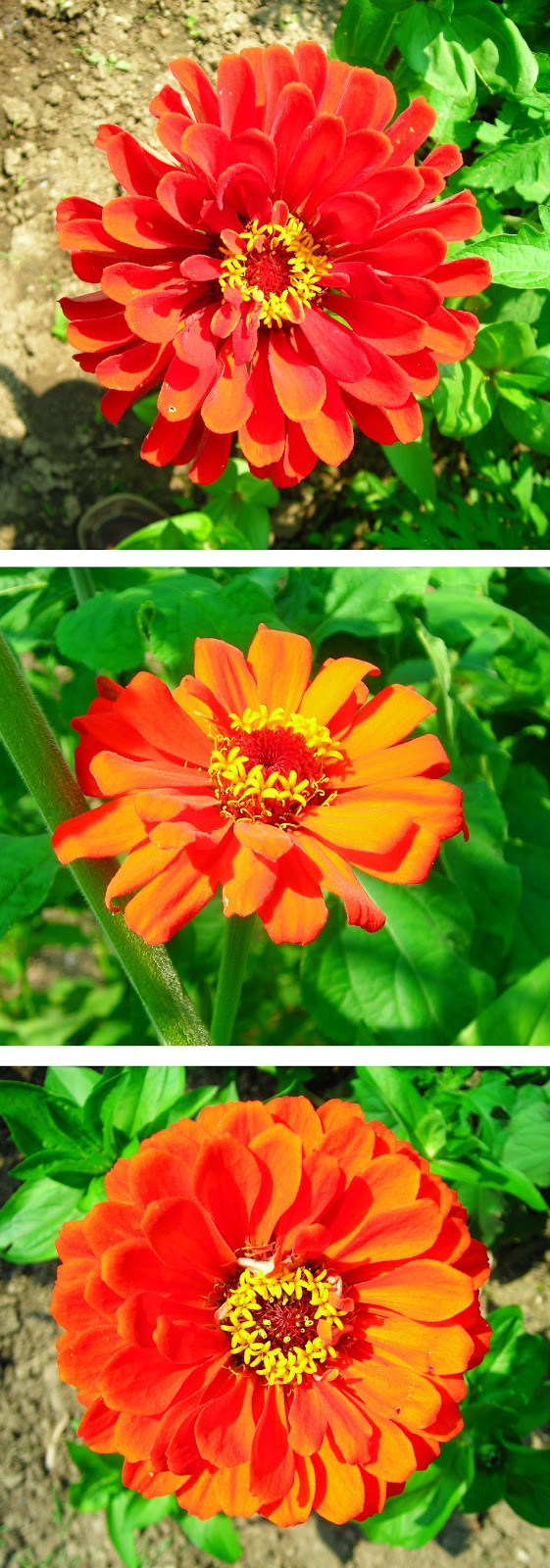
My Jubilant Zinnias
 
Was my garden worth the trouble? I have no doubt that the answer is yes. When I was in graduate school, I came to value—to crave—the literary life: that is, bringing together literature and my life. I felt that one of the greatest results to be gained from diligently studying great works of literary art was to live a life of expanded possibilities. My vegetables and flowers are filling my senses, and literature is shaping my understanding and appreciation of what I am experiencing. This summer, my garden is helping me confirm that literature amplifies existence.   

Sunday, June 21, 2015

My Summer in a Garden: The Chaos of Weeds and the Price of Order


I went away for a week. The weeds in the garden sensed that I was gone, and they went crazy. When I returned, I found a sea of thriving weeds where my garden had been. I had hoed them before I left. Where did they all come from in only a week? How did they get to be so tall in only eight days?

I have known many who would have given up—who would have said, “I can’t tackle a problem this big”—who would have let the weeds take the garden and who would have hoped to find a cucumber or a carrot hidden among the weeds later. Not I. With hope springing eternal, I got my hoe and began at one corner of the garden.

It was about 6:00 a.m. My plan was to finish the weeding before the deer flies were awake. Few insects in my area can make a human life a misery any more aggressively and ruthlessly than a deer fly. At about 9:00, I was still hard at work, and the first deer fly found me. It bit my neck. Then it bit the small of my back, where my shirt was clinging to the perspiration. For the next three hours, it alternated between biting my neck and biting my back. Several times, my instinct to eliminate my fierce adversary overcame my wish to protect nature, and I swatted at the fly. It was always too quick, flying off just as I swatted myself with the palm of my hand.

Painting of a Summer Farm, My Flea Market "Find"
 
The weeding went ever so slowly. When I reached the beets, I had to hunker down to pull by hand the weeds from the rows. I uprooted at least two beets, and I dutifully replanted them, mounding the dirt around them. In my experience, such replanting never works. Usually, the plant perishes. When it lives, it remains small and relatively unproductive. Why do I bother to replant the uprooted vegetables? Because I feel so guilty for having clumsily removed a growing plant that had sprung from an expensive seed.

When I came to the carrots, I was ready to cry out in anguish. Locating the stems of the weeds was practically impossible. Each time that I thought I had a weed stem firmly grasped between my thumb and fingers, I would softly pull back the foliage with my free hand to see if I had a weed or a carrot, and, with an astonishing frequency, I had a carrot in my grasp. The work proceeded with agonizing slowness. Even as careful as I was, I managed to tear several carrots out of the earth where they had been happily growing.

After several hours, my mind became my enemy. I kept thinking, “Surely, this is not a wise investment. The seeds, potatoes, and onions cost too much money and not enough of them grew. Here you are, losing hours that could be spent on more important tasks, and you could just as easily buy fresh vegetables at the farmers’ market. Why should you provide yourself as an entrĂ©e for a deer fly?”

By the time that I was ready to agree that I was a fool, I had reached the squash and cucumbers and was beginning to see the proverbial light at the end of the tunnel. The sun was beating down, and the perspiration was flowing freely. My shirt clung to me, and the band of my broad-brimmed straw hat was clammy. Even so, I was not going to give up now.

With a fury formed from the desire for victory, I slashed at the weeds. I did so in brief spurts of energy. My muscles were so tired that I could not sustain a long attack. In between bouts, I stood supported by my hoe for several seconds while summoning enough energy to flail at the bindweed, lamb’s quarter, and redroot pigweed. With a final effort, not Herculean but quite puny in fact, I scraped the last weed away.

I wish I could say I felt sorry for the carnage; after all, weeds are simply plants I consider to be in the wrong place. They were strewn about the garden, their wilting leaves half buried under dirt, half trampled by my feet. At the time, I was hardly contrite. I looked across a garden with well-defined rows of lettuce, onions, beans, and even flowers! Such lovely order had arisen from chaos!

Suddenly, I heard my first wren. I should say, “For the first time, I paid attention to the song of the wren.” Undoubtedly, the wren had been singing all along. I had been too focused on weeding to notice. As the bird warbled its notes, I relaxed and realized, “This is why I have a garden. It is my song expressed in vegetables that I can serve for lunch and dinner—vegetables with no herbicides, insecticides, or other ‘cides’ to make me ill—vegetables utterly organic and radically flavorful.” I could not put a price tag on something so pleasant. Smiling, I nodded that the garden was worth the work.